
The lantern years
Before mobile phones and ambulances, Aidah's lantern moving through the village meant a mother somewhere was safe.
A traditional birth attendant whose hands welcomed over 2,000 children — and whose witness still shapes maternal and child health in Kashangura Parish.
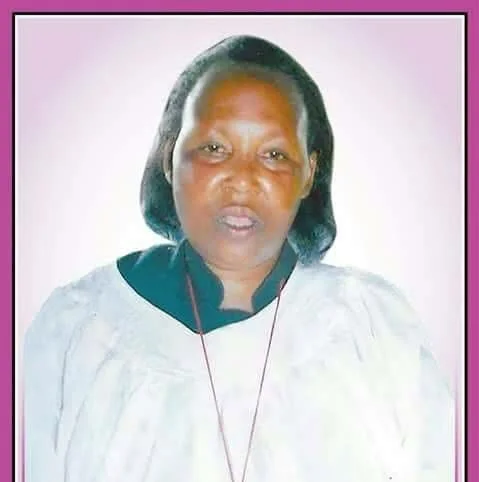
"Kayaaga's laughter belonged to her childhood, her faith guided her journey, and her service became her legacy."
Aidah Kyobutungyi Kugonza was born to Mr Yefesi Kanengyere and Mrs Mary Kiragara. Her family lived in Muhiito, Kitagata, Bushenyi, before moving to Nyamiswiiga, Kashangura, in what is now Ibanda District during the 1960s.
Her father affectionately nicknamed her Kayaaga, a name that carried a story about her cheerful personality. According to the family's explanation, the name relates to okuteera obuyaga — the practice of engaging in playful, respectful joking. Among the Banyankore, particularly people of similar ages, such exchanges are a cherished part of social interaction and a way of strengthening relationships.
Aidah was a jovial child who enjoyed joking with her peers. Her humour helped her connect with people, build friendships and develop the approachable character for which she would later be remembered. The name Kayaaga became more than a childhood nickname; it reflected the warmth, sociability and ability to connect with others that would become important qualities throughout her life.
Aidah's Christian journey was influenced by her mother, Mary Kiragara, who was an active and visible member of the Anglican Church. Growing up with this example helped establish faith as an important part of Aidah's life, shaping her values and her commitment to serving others.
In the 1970s, Aidah married Mr Charles Edward Kugonza and adopted the surname Kugonza. Together, they raised six children:
Her responsibilities as a wife and mother formed an important part of her life. Yet her care was not confined to her own household. She extended her concern to other families, mothers and children, becoming a person whom members of her community could turn to for support.
Faith was an important part of the life Kugonza and Kyobutungyi built together. Kyobutungyi was a committed Anglican Christian who served for many years in the Church of Uganda, including through leadership in the Mothers’ Union and mission coordination. She later became a lay leader at Kayarutanga Church of Uganda.
Her faith and service formed part of the wider family journey that she and Kugonza shared. Their story brings together marriage, parenthood, work, responsibility and a commitment to the values that guided their lives. The details of Kyobutungyi’s church leadership and her service across denominational boundaries are an important part of her own biography, while Kugonza’s story recognises the place of faith in their shared family life.
Aidah's commitment to Christianity extended beyond personal worship. Over the years, she served the Anglican Church in several leadership capacities, including as a Mothers' Union leader and mission coordinator.
Her commitment and service eventually led to her ordination as a lay leader in the Church of Uganda. At the time of her death, she was serving as a lay leader at Kayarutanga Church of Uganda.
Through these responsibilities, she contributed to the spiritual life of her congregation and supported the Church's mission among families and community members. Her faith was expressed not only through words and worship but also through practical service, leadership and concern for the wellbeing of others.
For Aidah, faith and community service were closely connected. The values she embraced through the Church were reflected in her work with mothers, her involvement in community health and her willingness to help people facing difficult circumstances.
At the time, efforts to reduce infant mortality required health organisations to understand the circumstances under which many mothers gave birth. In many communities, women often delivered their babies at home rather than in hospitals or other health facilities. This was frequently due to challenges such as a lack of reliable transport, financial constraints and other barriers to accessing formal healthcare. Consequently, many expectant mothers depended on traditional birth attendants (TBAs) — people they knew and trusted within their communities — for assistance during childbirth.
However, these circumstances also exposed mothers and newborns to serious risks. Without adequate knowledge, appropriate support or timely access to professional medical care, complications during pregnancy and childbirth could have tragic consequences, including the loss of mothers' and infants' lives. Recognising both the challenges facing families and the influential role traditional birth attendants played in their communities, efforts were made to equip these attendants with better knowledge and skills. UNICEF supported the training of TBAs as part of wider efforts to raise awareness about infant mortality and promote safer maternal and newborn care.
The training aimed to help traditional birth attendants guide expectant mothers towards antenatal services, appreciate the importance of professional healthcare, recognise warning signs of pregnancy complications and encourage timely referral to health facilities whenever necessary. By strengthening the knowledge of people whom mothers already trusted, the initiative sought to improve awareness and help reduce preventable deaths associated with pregnancy and childbirth.
Aidah "Kayaaga" Kugonza was one of the traditional birth attendants selected to benefit from this very impactful UNICEF training in the 1990s.
For Aidah Kyobutungyi Kugonza, this responsibility was also a continuation of a family tradition of caring for mothers. Her mother, Kiragara, was herself a celebrated traditional birth attendant of her time. According to the family's account, by God's grace, Kiragara completed her career without recording a death among the mothers and babies she attended. Her dedication established a powerful example of service, compassion and responsibility in maternal care — an example that Aidah would carry forward in her own life.
Aidah later became a UNICEF-trained traditional birth attendant, receiving training that strengthened her ability to support expectant mothers. She was also provided with a first-aid kit to assist her in her work. With this training and equipment, she served mothers in her community, offering guidance and support while encouraging safer childbirth practices and greater awareness of appropriate healthcare.
Remarkably, Aidah's own career as a traditional birth attendant was also marked by a record of no loss of life among the mothers and babies she attended, according to the family's account. This achievement was a source of pride and reflected the importance she attached to the lives entrusted to her care. Her work helped families navigate the challenges of childbirth in circumstances where accessing formal health services could be difficult.
The story of Kiragara and Aidah is therefore more than a story of two generations of women serving their communities. It is a story of knowledge passed from mother to daughter, of trust built within families and communities, and of a shared commitment to protecting mothers and newborns. While Aidah's UNICEF training strengthened her skills and connected her work to wider maternal health efforts, the spirit of service had roots in the example set by her mother.
Her dedication to maternal care was also part of a broader commitment to community health. Beyond assisting mothers during childbirth, Aidah worked with Ibanda Hospital in supporting community health outreach, served as a focal person for hygiene inspections in Karindiiro and Kashangura, and mobilised mothers to participate in immunisation outreach activities in Kashangura.
Aidah's service to maternal and child health extended beyond assisting women during childbirth. Her leadership, local knowledge and ability to build relationships made her an important link between communities in Kashangura and the health services provided by Ibanda Hospital, also commonly known as Kagongo.
She worked with the hospital in supporting community outreach activities associated with Community Basic Health Care (CBHC). Through her relationships and mobilisation skills, she helped connect health workers with the people they were seeking to serve.
Aidah also served as a focal person for community hygiene inspections in Karindiiro and Kashangura. This responsibility reflected her commitment to improving the conditions that influence public health, including hygiene and sanitation within the community.
Another important part of her work involved mobilising mothers and gathering families for immunisation outreach activities in Kashangura. Her familiarity with the community and the trust people placed in her helped health teams reach mothers and children who needed these services.
These activities demonstrate that her contribution to healthcare was not limited to individual acts of assistance. She helped create connections between health institutions and the households they served. By encouraging participation, mobilising families and supporting outreach, she contributed to the wider effort to improve maternal and child health in her community.
Her example reminds us that effective community healthcare depends not only on hospitals and medical personnel but also on trusted local people who can bring communities and health services together. Aidah's role in this work reflected the same concern for mothers and children that had shaped her years as a traditional birth attendant.
Alongside her church and community responsibilities, Aidah was a hardworking businesswoman. She engaged in produce trading, farming and production, value addition, and the operation of a shop. She also conducted business at Omurushoro on market days.
These activities reflected her resourcefulness and determination to work for the wellbeing of her family. Her involvement in agriculture and trade also brought her into regular contact with people from different backgrounds, strengthening the relationships that proved valuable in her wider community engagement.
Aidah demonstrated that family responsibility, enterprise, faith and public service could exist side by side. Her life was one of practical work as well as compassion, and her ability to balance different responsibilities formed an important part of her character.
The vision for accessible community ambulance services is deeply connected to Aidah's own experience during the period of her illness.
At the height of her illness, her family wished to take her back to Mulago Hospital in Kampala for another medical assessment, hoping to establish whether an earlier diagnosis had been correct. By that time, however, she was too weak to travel by public transport. An ambulance was needed for the journey from Ibanda to Kampala.
For many families, the cost of such transport would have been a substantial burden. Yet Aidah's long-standing relationships within the community and the health sector helped her family find assistance. With support from Mr Tumusiime, the GISO, and through the connection with Ibanda Hospital, they were able to secure an ambulance at the cost of fuel alone.
That experience left a lasting lesson: access to emergency transport can make a critical difference to families facing serious illness, especially when they must travel long distances for specialised care.
It also demonstrated how community relationships and institutional cooperation can help overcome barriers that might otherwise prevent people from seeking treatment. The assistance her family received was deeply meaningful, but it also highlighted the difficulties that families without such connections might face when urgently seeking medical care.
This experience became an important inspiration for the Aidah Kugonza Foundation's vision of supporting more accessible community ambulance services. A painful family experience thus helped shape a wider aspiration: to make it easier for other families to obtain the transport they need when medical emergencies arise.
Looking across Aidah's life, a consistent theme emerges: she used her abilities, relationships and experience to support others.
As a businesswoman and farmer, she worked to provide for her family. As a Christian leader, she served her congregation and supported its mission. As a traditional birth attendant, she assisted expectant mothers and promoted awareness of safer childbirth. Through her partnership with Ibanda Hospital, she helped mobilise communities for health outreach, hygiene inspections and immunisation activities.
These roles were not separate from one another. Her ability to connect with people, her community standing and her willingness to take responsibility helped her serve in different settings. Whether working in business, the Church or community health, she demonstrated the value of trust, personal commitment and practical action.
Her life also illustrates how meaningful community development often depends on people who understand local needs and are trusted by those around them. Aidah's service was rooted in the relationships she built and the needs she saw among the people she knew.
The Aidah Kugonza Foundation seeks to carry forward the values that defined Aidah's life: faith, compassion, community participation and a commitment to improving the wellbeing of others.
Its areas of focus reflect important aspects of her personal story and community service, including:
These areas of focus are a continuation of the values and experiences that shaped Aidah's life. The Foundation's purpose is not simply to preserve her memory, but to translate that memory into meaningful action for present and future generations.
Through these initiatives, the Foundation can honour her legacy by helping communities build stronger connections, improve access to essential services and create opportunities for healthier, more dignified lives.
The story of Aidah Kyobutungyi Kugonza is the story of a woman whose life brought together family, faith, enterprise and community service. She was a mother and family matriarch, a committed Christian leader, a businesswoman, a farmer, a traditional birth attendant and a community health mobiliser.
Her story also carries the legacy of her mother, Kiragara, whose example as a celebrated traditional birth attendant helped establish a family tradition of caring for mothers and newborns. Through their respective work, the two women became associated with a shared commitment to protecting life and supporting families during childbirth.
The name Kayaaga recalls the cheerful child who connected with people through humour and friendly conversation. In later life, that ability to connect with others found expression in her community service: bringing mothers together, mobilising families for immunisation, supporting health outreach and helping people access assistance.
Her life reminds us that a lasting legacy is built not only through public recognition, but also through the lives touched, the responsibilities fulfilled and the compassion shown to others.
Through the Aidah Kugonza Foundation, her story continues — not merely as a memory of what she did, but as an encouragement to keep serving, caring and building healthier, more connected communities.
Aidah Kyobutungyi Kugonza — Kayaaga — is remembered for a life in which faith became service, relationships became a resource for others, and compassion became a lasting legacy.
Before mobile phones and ambulances, Aidah's lantern moving through the village meant a mother somewhere was safe.
She believed listening to a labouring mother was half the medicine — patience, prayer, presence.
She trusted formal medicine and never delayed a referral when a case had moved beyond her reach.
Born to Mr Yefesi Kanengyere and Mrs Mary Kiragara. The family lived in Muhiito, Kitagata, Bushenyi, before moving to Nyamiswiiga, Kashangura, in the 1960s — in what is now Ibanda District.
Her father affectionately nicknamed her Kayaaga — from okuteera obuyaga, the playful, respectful joking of the Banyankore — a name that captured her warmth, humour and sociability.
Married Mr Charles Edward Kugonza. Together they raised six children: Edgar, Emanuel, Paul (Muwanga), Janet, Stephen and Rev. Jastina.
Served the Anglican Church as Mothers' Union leader and mission coordinator, and was ordained a lay leader — serving at Kayarutanga Church of Uganda.
Trained as a traditional birth attendant under UNICEF's programme, carrying forward her mother Kiragara — herself a celebrated birth attendant who never lost a mother or baby.
Her family and the community established the Aidah Kugonza Foundation to preserve and continue her work.
Aidah also championed routine child immunisation in partnership with Ibanda Hospital (Kagongo), helping a generation of children survive their first five years.
Acknowledged by local leadership, parish institutions and partner clinicians as a foundational figure in maternal and child health.
Her children and the families she served continue to speak of her as "a mother to mothers" — the highest honour her community could give.
"Every mother saved is a future preserved."
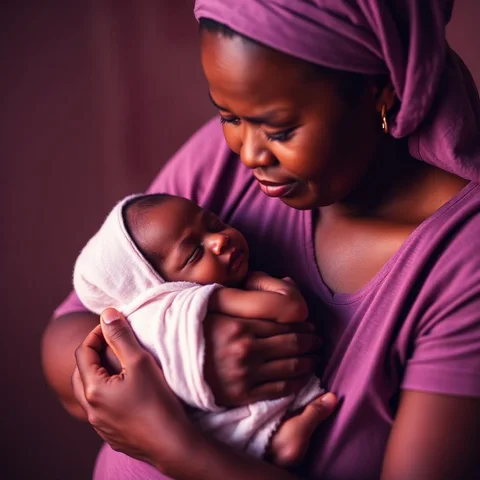

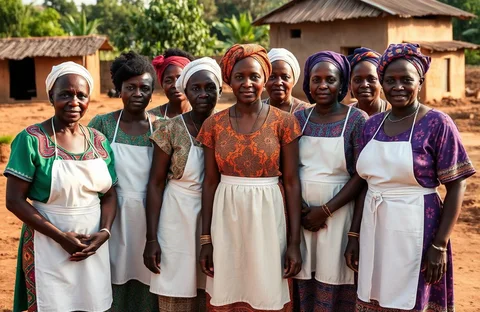
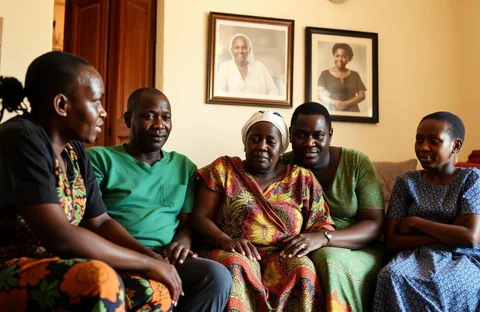
More historical photographs will be added as the family contributes to the archive.